An analysis of South Africa’s diesel consumption volumes and how demand is distributed across key industries
Overview
Diesel is the single most consumed petroleum product in South Africa. It underpins freight logistics, keeps mines operational, sustains agriculture, and, until recently, kept the lights on when the national grid failed. Understanding where diesel goes, and in what volumes, reveals much about the structure and vulnerabilities of the South African economy.
South Africa consumes approximately 60 million litres of petrol and diesel combined every day, costing the economy an estimated R1.4 billion in daily fuel expenditure. Of the roughly 30 billion litres of total fuel consumed nationally per year, diesel accounts for the dominant share. By 2024, diesel (classified as Automotive Gas Oil, or AGO) commanded approximately 51% of the total refined petroleum products market, making it by far the country’s most consumed fuel. In 2023, diesel consumption reached an equivalent of 272,000 barrels per day, up from 265,000 barrels per day in 2022.
Retail diesel volumes, the segment measured at service stations and direct commercial accounts grew from 4.1 billion litres in 2013 to approximately 4.4 billion litres in 2022, according to the Department of Mineral Resources and Energy (DMRE). However, this retail figure captures only a portion of total national consumption; significant volumes flow directly to large industrial users, mines, and power generators outside the retail channel.
Why Diesel Dominates
South Africa’s transport system is overwhelmingly road-based, and heavy goods vehicles, buses, mining equipment, and agricultural machinery all run on diesel. Compared to petrol, diesel offers superior energy density and torque characteristics, making it the fuel of choice for any application requiring sustained load-bearing performance.
Oil and oil products remain the largest energy import category for South Africa, accounting for close to 80% of all energy imports in 2021. Approximately 75% of the country’s petroleum product imports by volume consist of diesel, gasoil, gasoline, and blending components — with diesel and gasoil comprising the bulk of that share. South Africa imports crude oil primarily from Nigeria and Saudi Arabia, as well as from the United States and other African producers.
Industry Segmentation
1. Road Transport & Logistics : The Dominant Consumer
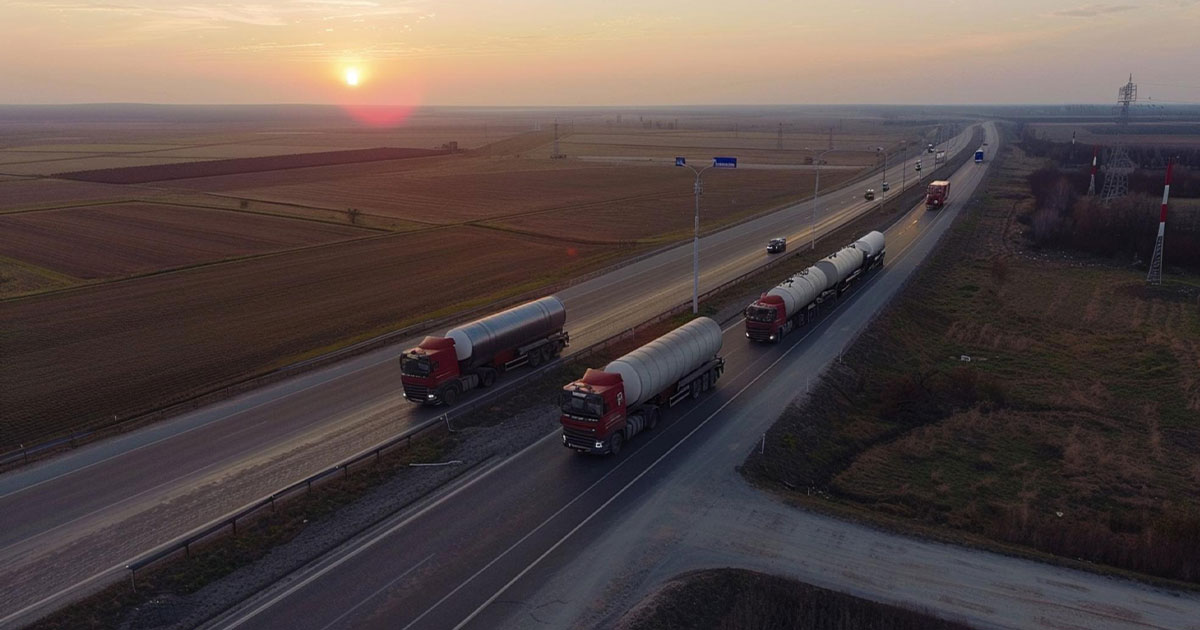
The transport and logistics sector is the single largest consumer of diesel in South Africa. South Africa’s freight network is almost entirely road-dependent, with trucks carrying the majority of goods between ports, warehouses, mines, farms, and retail centres. The commercial vehicle fleet expanded meaningfully in recent years — commercial vehicle sales grew by more than 13% between 2021 and 2022 — directly driving fuel demand.
Long-haul trucking corridors connecting Durban’s port to the Gauteng industrial heartland, Johannesburg to Cape Town, and routes into neighbouring landlocked countries all depend almost entirely on diesel. Gauteng, KwaZulu-Natal, and the Western Cape together account for approximately 67% of all fuel consumed in South Africa, reflecting the concentration of transport activity around these economic centres. KwaZulu-Natal in particular records notably higher diesel throughput per fuel station than other regions, driven by logistics volumes passing through the Port of Durban.
Bus and minibus taxi fleets, while predominantly diesel-powered for the larger intercity and coach segment, also contribute to this category’s demand.
2. Mining: A Structural Pillar of Diesel Demand
South Africa is one of the world’s largest producers of platinum, gold, coal, manganese, chrome, and diamonds. The mining industry is among the most diesel-intensive sectors in the economy. Surface and underground operations rely on diesel-powered haul trucks, drills, loaders, ventilation systems, and generators — often in locations far removed from grid electricity infrastructure.
Mpumalanga, the country’s coal-mining heartland, is the fourth-largest provincial consumer of diesel, accounting for approximately 12% of national diesel volumes. Limpopo, the Northern Cape, and the North West province — all home to major mining operations — are similarly significant consumers.
Mines that operate in off-grid or grid-constrained locations rely on diesel not just for mobile equipment but for stationary power generation, making them dual consumers: operational fuel and electricity backup combined.
3. Power Generation: The Loadshedding Multiplier
Perhaps the most dramatic recent shift in South Africa’s diesel consumption story has been the role of power generation, driven by the Eskom electricity crisis. From 2021 through early 2024, South Africa experienced escalating load-shedding — reaching its worst point in 2023 when outages occurred on 335 out of 365 days.
Eskom operates a fleet of Open Cycle Gas Turbines (OCGTs) — diesel-powered peaking plants — as emergency generation reserves. At the height of the crisis, Eskom spent R24.27 billion on diesel in 2023 alone to run these turbines. This represented a massive spike in national diesel demand not historically associated with power generation.
The private sector responded in parallel. Retailers, manufacturers, hospitals, data centres, and households invested heavily in diesel generators to maintain operations during outages. Shoprite, for example, spent R1.3 billion on diesel for its generator fleet during one financial year. The poultry and food production firm Astral Foods suffered its first-ever annual loss, citing R1.7 billion in loadshedding-related costs, a significant portion attributable to diesel backup generation.
The picture shifted dramatically from March 2024 onwards. Following Eskom’s Generation Operational Recovery Plan, loadshedding was suspended from 26 March 2024. By December 2024, Eskom had achieved 261 consecutive days without load-shedding, and diesel savings had reached R16.46 billion year-on-year — a 67.7% reduction in OCGT diesel expenditure compared to the same period in 2023. By March 2026, South Africa reached 300 consecutive days without load-shedding, with diesel savings running approximately 57% lower year-on-year. This structural shift has meaningfully reduced national diesel demand for power generation, though private backup generators remain widely installed across industry.
4. Agriculture: Fuelling Food Security
Agriculture is a significant but often under-quantified consumer of diesel in South Africa. Tractors, harvesters, irrigation pumps, grain handling equipment, and transport vehicles running between farms and processing facilities all depend on diesel. In remote and rural provinces where grid electricity is unreliable or absent, diesel generators also provide primary power for irrigation and cold-chain storage.
South Africa’s agricultural sector spans grain production in the Free State and North West, fruit and wine in the Western Cape, sugar cane in KwaZulu-Natal, and livestock and game farming across multiple provinces. Each of these sub-sectors operates diesel-intensive machinery across planting, cultivation, harvesting, and post-harvest logistics cycles.
The DMRE’s data on commercial-sector diesel consumption across provinces shows elevated volumes in the Western Cape and KwaZulu-Natal, provinces where export-oriented agricultural activity is highest. During periods of loadshedding, agricultural diesel demand increased further as producers relied on generators to protect high-value crops and cold-storage infrastructure.
5. Construction & Infrastructure
Construction activity — from housing and commercial property to roads, ports, and energy infrastructure — is a material consumer of diesel. Earthmoving equipment, mobile cranes, concrete mixers, drilling rigs, and site generators all run on diesel. Infrastructure development activity, cited by Mordor Intelligence as a key driver of fuel demand growth through to 2029, is expected to sustain this segment’s consumption.
South Africa’s ongoing public infrastructure investment programme — including road rehabilitation, water infrastructure, and energy projects — supports consistent baseline demand from this sector.
6. Manufacturing & Industrial
Oil and oil products are among the primary energy inputs to the manufacturing sector. Industrial processes requiring heat, mechanical energy, and backup power all draw on diesel. The manufacturing sector in South Africa spans food and beverage processing, automotive assembly (BMW, Toyota, Ford, Volkswagen, and Nissan all operate plants in the country), chemicals, metals, and paper.
During the peak loadshedding period, manufacturers’ diesel consumption increased sharply as they ran backup generation to maintain production continuity and protect capital-intensive equipment.
Geographic Distribution
Diesel consumption in South Africa is heavily concentrated geographically:
- Gauteng is the largest provincial consumer, driven by the concentration of industry, logistics, and commerce in Johannesburg and Pretoria.
- KwaZulu-Natal (approximately 19% of diesel volumes) benefits from Durban’s role as the country’s primary import/export port and the trans-Natal logistics corridor.
- Western Cape (approximately 17%) reflects the region’s agricultural export economy, tourism infrastructure, and Cape Town’s role as a major commercial centre.
- Mpumalanga (approximately 12%) is anchored by coal mining and power generation at Eskom’s coal-fired plants.
- The remaining five provinces collectively account for a smaller share of diesel demand.
Trends and Outlook
Several forces are shaping diesel demand in South Africa over the coming years:
Moderate demand growth is anticipated, with a compound annual growth rate of approximately 1.3% forecast between 2024 and 2029, driven by economic growth, population increases, and infrastructure development.
The loadshedding dividend has structurally reduced diesel consumed by Eskom’s OCGTs. However, private generator capacity installed during the crisis years represents a latent demand pool that may re-activate if grid reliability deteriorates.
Rising private solar is reducing overall electricity demand on the grid and has been cited by Eskom as a factor that allowed it to better manage its emergency diesel reserves during 2024. Private rooftop solar is also, indirectly, reducing the business case for diesel backup generation — a long-term moderating factor on demand.
Alternative fuels remain a future consideration. South Africa’s agricultural sector has been identified as a potential biodiesel feedstock producer, and compressed natural gas is being evaluated for transport fleet applications. However, meaningful substitution of diesel at scale remains a medium-to-long-term prospect rather than an imminent demand disruption.
Refining capacity constraints persist. Multiple South African refineries have closed or reduced capacity in recent years, increasing dependence on imported refined products. The government has explored options including a new East Coast crude refinery, though development timelines remain uncertain.
Conclusion
Diesel is, in the most practical sense, the backbone of the South African economy. From the trucks on the N3 to the haul vehicles in the Bushveld, the harvesters in the Free State grain belt, and the OCGTs that once held back Stage 6 load-shedding, diesel’s role is pervasive and structural. While the resolution of the Eskom crisis has meaningfully reduced one of the largest recent demand drivers, the transport, mining, and agricultural sectors ensure that South Africa’s appetite for diesel will remain substantial for the foreseeable future.