Published by Leano Energy | Industry Insights
South Africa runs on diesel. From the massive mining hauls of Mpumalanga to the long-distance trucks crossing the Karoo, from emergency generators keeping the lights on during load shedding to the fishing trawlers leaving Cape Town’s harbour — diesel is the backbone of the country’s economy. But how does this indispensable fuel actually get made, and how does it travel from its origins to the forecourt where you fill up?
The answer is more fascinating and more uniquely South African than most people realise.
A Country Without Its Own Crude Oil
South Africa sits on vast reserves of gold, platinum, and coal, but not crude oil. The country has no significant domestic petroleum reserves of its own, meaning that all crude oil requirements must be sourced through imports, principally from the Middle East and Africa. This reality has shaped the country’s entire approach to fuel production — and led to one of the most innovative energy systems in the world.
South Africa is a net importer of fuel. Over and above what can be produced locally, the country must import additional finished petroleum products to satisfy a domestic demand of roughly 25 billion litres per year. To meet this demand, South Africa developed a dual-track fuel production system: conventional crude oil refining on one hand, and locally pioneered synthetic fuels technology on the other.
The Two Paths to Diesel
Path 1: Crude Oil Refining
Approximately 64% of South Africa’s refined petroleum comes from conventional crude oil refining. The process begins thousands of kilometres away when oil tankers are loaded at overseas refineries and ports — primarily in the Middle East and along the African coast — and set course for South Africa.
Arrival and offloading Crude oil tankers arrive at coastal ports, notably Saldanha Bay on the West Coast, where the oil is offloaded and then transported via pipeline to refineries. The country has historically operated four crude oil refineries: two on the coast (in Durban and Cape Town) and two inland.
As of today, the two principal operational refineries are:
- Natref : South Africa’s only inland crude oil refinery, located in Sasolburg, near Johannesburg. It is a joint venture between Sasol Oil and the Prax Group (formerly TotalEnergies), and is highly efficient in refining heavy crude oil.
- Astron Energy Refinery : Located in Cape Town, this refinery restarted operations in May 2023 after an extended shutdown following an explosion in 2020. Crude oil arrives by tanker at Saldanha Bay, is piped to the refinery, and processed into LPG, petrol, jet fuel, diesel, and fuel oil.
The refining process Once crude oil arrives at a refinery, it enters a process called fractional distillation. Inside tall distillation towers, the crude is heated and separated into its various components based on their different boiling points. Diesel sits in the middle distillate range — heavier than petrol and jet fuel, lighter than fuel oil.
Several additional steps follow distillation. Hydrotreating removes sulphur and other impurities from the diesel stream, a critical step given South Africa’s increasingly strict fuel quality standards. Catalytic cracking units break down heavier crude fractions into lighter, more valuable products like diesel and petrol. The Fluidised Catalytic Cracking Unit (FCC) used at refineries like Astron’s converts heavy products into LPG, petrol, and diesel. After processing, the final product streams are blended together and stored in large holding tanks, ready for distribution.
Path 2: Synthetic Fuels — South Africa’s Energy Innovation
Here is where South Africa’s story becomes genuinely extraordinary. Roughly 36% of the country’s fuel demand is met through synthetic fuels produced locally — largely from coal and, to a lesser degree, from natural gas. This is the result of decades of investment in a technology that South Africa, largely through necessity, helped commercialise for the world.
The Sasol story In the 1950s, faced with international isolation and the ever-present risk of crude oil supply disruptions, the South African government backed the establishment of the South African Coal, Oil and Gas Corporation today known as Sasol. The first synthesis reaction at Sasolburg took place in August 1955, and by November that year, the first petrol from coal was being pumped at scale.
What followed was the construction of the world’s largest commercial coal-to-liquids facility at Secunda, in Mpumalanga. Sasol II came online in 1980 and Sasol III in 1981. Today, the Secunda plant has a total production capacity of around 160,000 barrels per day of synthetic liquid fuels, supplying approximately 28% of South Africa’s fuel needs from coal.
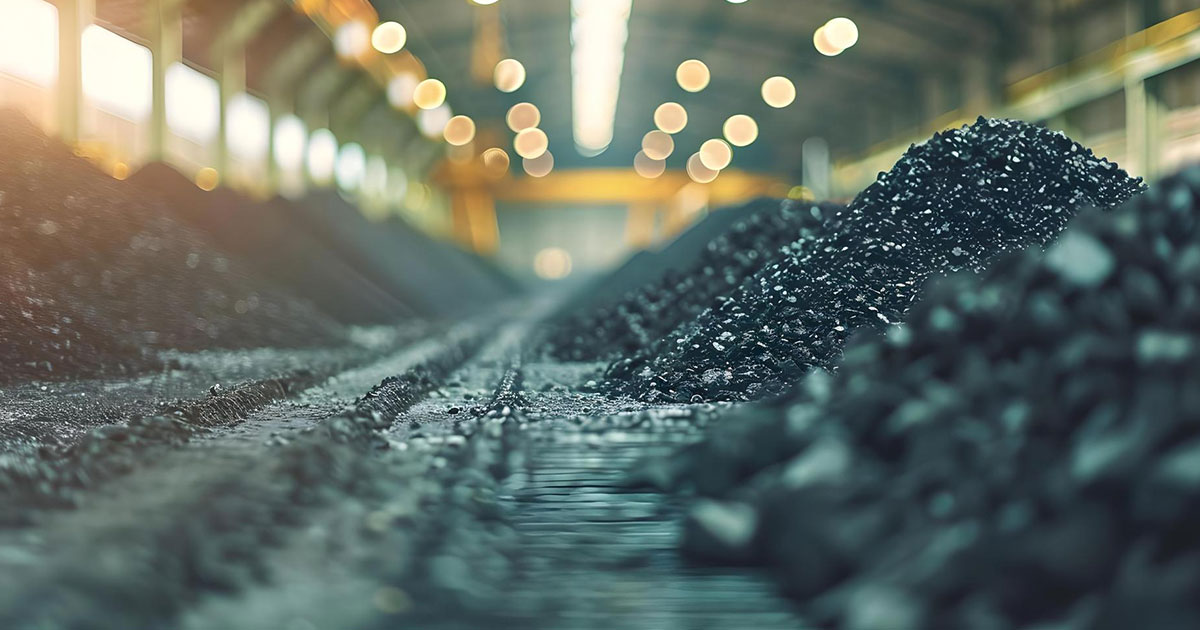
How coal becomes diesel The process at Secunda begins underground. Sasol Mining extracts over 40 million tonnes of coal per year from mines in the Secunda area, including operations at Bosjesspruit, Syferfontein, and other collieries in Mpumalanga. The coal is crushed, blended for consistency, and fed into massive gasifiers.
In the gasifiers, electricity generated from steam and gas heats the coal to approximately 1,300°C in the presence of steam and oxygen. This converts the coal into a raw synthesis gas a mixture of hydrogen and carbon monoxide known as syngas.
The syngas is then cooled, cleaned, and conditioned. During this stage, valuable co-products like tar oils, ammonia, sulphur, and phenols are recovered from the stream. The purified syngas then enters the Fischer-Tropsch reactors the heart of the process where it reacts in the presence of an iron-based catalyst at elevated pressure and around 350°C. This chemical reaction converts the syngas into hydrocarbons: the building blocks of diesel, petrol, jet fuel, LPG, and a host of chemicals.
The hydrocarbon streams from the reactors are cooled, liquefied, and then separated through fractionation into the final product streams. The diesel produced through this route is notably high in quality virtually sulphur-free and recognised internationally as a particularly clean fuel.
Sasol’s Fischer-Tropsch technology, pioneered in South Africa, remains one of the most significant proprietary industrial processes in the world.
Getting Diesel to Where It’s Needed
Producing diesel is only half the challenge. Getting it reliably to consumers across a geographically vast and economically diverse country is the other.
Pipelines : The backbone of South Africa’s fuel distribution infrastructure is an extensive pipeline network, owned and operated by Transnet as a state-owned company. Refiners and importers contract with Transnet for transmission services. Pipelines carry fuel from coastal refineries and import terminals inland with Gauteng, the country’s economic hub, being a primary destination. Much of the diesel and petrol produced at or imported through Durban, for example, is piped inland to Gauteng through largely underground pipelines.
Depots and terminals : From the pipelines, diesel is delivered to a network of approximately 200 depots and storage terminals distributed around the country. It is often at this stage that fuel companies blend additives into the diesel — packages that can improve engine performance, reduce deposits, and enhance fuel economy. These branded additive packages are what differentiate fuel from one company’s forecourt versus another’s.
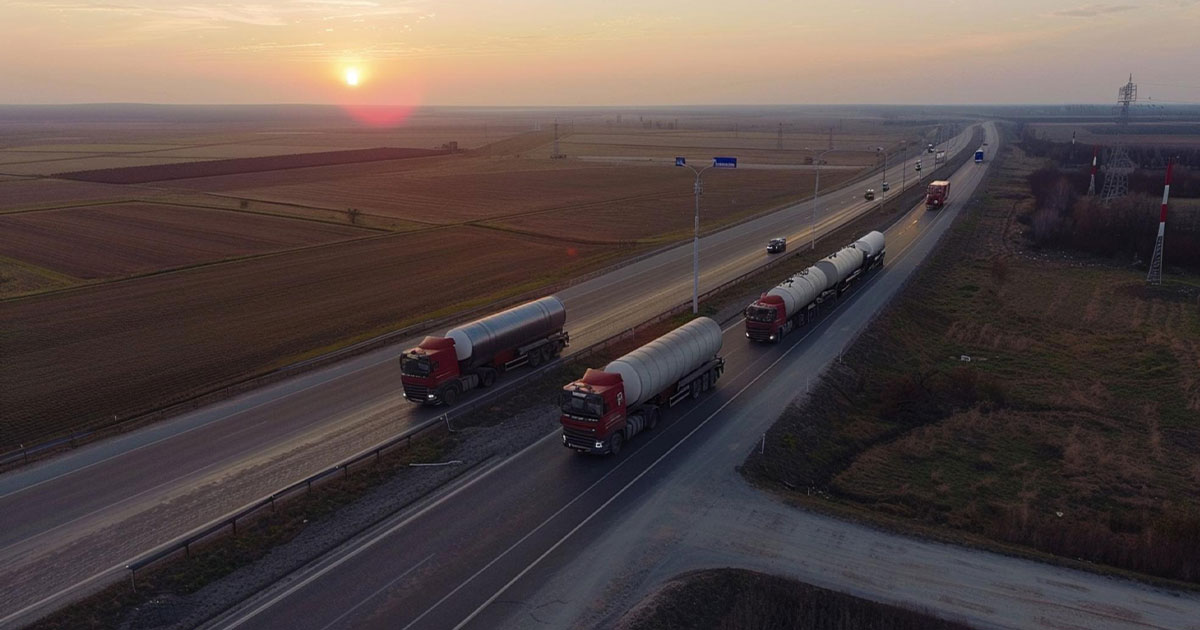
Road, rail, and coastal shipping : Beyond pipelines, road tankers, railway lines, and coastal tanker vessels all play a role in the distribution network. Road tankers are particularly crucial for reaching the approximately 4,600 service stations and 100,000 direct commercial consumers farmers, mining operators, and industrial users who sit beyond the reach of the pipeline network.
The last kilometre Before diesel is pumped into a vehicle or generator, it passes through one final quality check at the service station. Delivery drivers and station managers verify the product against set standards. The diesel then enters segregated underground holding tanks, ready for dispensing.
What Determines the Price at the Pump?
Diesel pricing in South Africa is regulated by the Department of Mineral Resources and Energy. Unlike petrol which is fully regulated at the pump diesel is regulated at wholesale level, meaning retailers have some latitude in their final consumer pricing.
The foundation of the price is the Basic Fuels Price (BFP), a mechanism designed to represent the realistic cost of importing diesel from international refining centres, primarily in the Mediterranean, the Arab Gulf, and Singapore. The BFP means South African diesel prices move in line with global crude oil prices and international supply and demand dynamics — and fluctuate with the rand/US dollar exchange rate.
Layered on top of the BFP are various taxes, levies, and distribution margins that make up the full retail price.
Challenges and the Road Ahead
South Africa’s fuel supply chain faces real pressures. Several refineries that were operational a decade ago are now idle the Engen refinery in Durban and the SAPREF facility (a joint venture between Shell and BP) both ceased operations in recent years due to flooding damage and commercial decisions. This has increased the country’s reliance on imported finished product, adding complexity and cost to the supply chain.
The Secunda CTL plant, while a remarkable engineering achievement, carries significant environmental implications as the world’s largest single point source of greenhouse gas emissions. Sasol has acknowledged this and is exploring pathways to reduce its carbon footprint, including green hydrogen production and renewable energy procurement.
Meanwhile, the energy transition is reshaping demand patterns. Load shedding has driven a surge in diesel demand for generators across homes, hospitals, and businesses. Electric vehicles are beginning to enter the market, though widespread uptake remains years away.
For Leano Energy and the broader fuel supply sector, understanding this complex and uniquely South African production landscape is essential because reliable access to diesel remains, for now, fundamental to keeping the country moving.
At Leano Energy, we are committed to providing reliable, quality fuel supply to businesses and consumers across South Africa. Get in touch with our team to find out how we can support your energy needs.
Sources: U.S. Energy Information Administration (EIA), Sasol Limited, Astron Energy, Fuels Industry Association of South Africa (FIASA), Gulfstream Energy, TotalEnergies South Africa