Published by Leano Energy | Industry Insights
Introduction
Every time a South African fills up with diesel, they are paying the end result of a complex chain of global and domestic forces — from crude oil traded on international markets to government levies set in Pretoria, and from shipping freight rates on the high seas to the transport cost of getting fuel to an inland depot. Understanding how diesel is priced helps consumers, businesses, and policymakers make sense of what is, for many South Africans, one of the most significant and volatile costs they face.
Diesel is particularly important to the South African economy. It powers the trucks that move goods across the country, the farming equipment that feeds the nation, the generators that kept the lights on during years of load-shedding, and the mining equipment that drives a substantial portion of GDP. When diesel prices rise, costs ripple through virtually every sector of the economy — and ordinary consumers feel it in the price of food, transport, and everyday goods.
How Diesel Pricing Works: Regulated vs. Unregulated
One of the most important things to understand about diesel in South Africa is that it is not regulated at the retail level in the same way that petrol is.
For petrol, the government sets a maximum retail price that all filling stations in a given pricing zone must charge. Every petrol station in Gauteng, for instance, will sell 95 Unleaded at exactly the same price. Diesel is different. While the Department of Mineral and Petroleum Resources (DMPR) publishes a monthly wholesale reference price for diesel, filling stations are free to set their own retail margins. This is why diesel prices can vary meaningfully from one service station to the next — something that became especially visible in March and April 2026, when Gauteng filling stations were observed selling diesel at prices ranging from under R21 to over R27.50 per litre in the days before the official price adjustment.
This distinction matters for consumers: with petrol, there is no point shopping around on price, but with diesel, it genuinely pays to compare prices between stations.
The Make-Up of the Diesel Price
The diesel price is built up from several distinct layers, broadly split into international (external) factors and domestic (internal) factors.
1. The Basic Fuel Price (BFP)
The foundation of any fuel price in South Africa is the Basic Fuel Price, or BFP. In simple terms, the BFP represents what it would cost a South African importer to purchase refined diesel from an international refinery and ship it to South African shores. It is calculated using an import parity model — essentially pricing fuel as if it were imported, even when it is refined domestically.The BFP is quoted in US dollars per barrel or per tonne, and then converted to South African cents per litre using the prevailing rand/dollar exchange rate. It incorporates several sub-components:
- The international product price: Based on published spot prices from refining hubs in the Mediterranean, the Arab Gulf, and Singapore, as reported by price agency Platts.
- Freight costs: The cost of shipping refined product from those export centres to South African ports, using freight rates published by the London Tanker Brokers Panel and adjusted monthly using the Average Freight Rate Assessment (AFRA).
- Demurrage: The cost associated with ships waiting in port to discharge their cargo, limited to three days in the BFP calculation.
- Insurance and other incidentals: Calculated at 0.15% of the FOB (free on board) value and freight, covering insurance, letters of credit, surveyors’ fees, and laboratory costs.
The BFP is the most volatile component of the diesel price. In March 2026, for example, the BFP for diesel was approximately R9.84 per litre — but by April it had surged to around R19.88 per litre, driven by a sharp rise in Brent crude oil prices and rand weakness linked to Middle East tensions.
2. Government Levies and Taxes
A substantial portion of what consumers pay for diesel goes directly to the state. The two primary levies are:The General Fuel Levy (GFL): This is a flat tax per litre, administered by the National Treasury and treated as general government revenue — it does not flow into any dedicated fund. Historically, the GFL for diesel has been set at around R3.84 per litre. In response to the dramatic price increases of April 2026, Finance Minister Enoch Godongwana announced a temporary R3 per litre reduction in the General Fuel Levy, effective 1 April to 5 May 2026, to cushion the blow to consumers and businesses facing unprecedented diesel price increases.The Road Accident Fund (RAF) Levy: This levy is collected on every litre of fuel sold and channelled into the Road Accident Fund, which compensates victims of road accidents in South Africa. The RAF levy is set annually during the National Budget Speech and is currently R2.18 per litre for both petrol and diesel.Together, these two levies add approximately R6.02 per litre to the diesel price under normal circumstances — a significant tax burden that makes a meaningful contribution to the final price at the pump.
Other smaller levies include:
- The Customs & Excise Levy: Collected under an agreement with the Southern African Customs Union (SACU).
- The Petroleum Products Levy: A levy on manufacturers and importers of petroleum products.
- The IP Tracer Dye Levy: Introduced to fund the injection of a tracer dye into illuminating paraffin (IP), making it possible to detect when paraffin has been illegally blended into diesel — a practice that became a significant problem in South Africa from 2019 onwards.
- The NERSA Levy (Pipeline Levy): A levy to reimburse pipeline users for the NERSA-regulated tariff on transporting fuel through the pipeline network.
- The Slate Levy: A self-correcting mechanism that compensates oil companies for over- or under-recoveries that occurred in the preceding pricing period. Because fuel prices are set once a month while oil is bought and sold continuously, there is always a gap between what oil companies actually paid and what the pricing formula assumed they paid. The Slate Levy adjusts for this discrepancy over time.
- The Demand Side Management Levy (DSML): Introduced in 2006, this levy applies specifically to 95 Unleaded petrol sold in inland provinces and is designed to discourage consumption of higher-octane fuel where it is less necessary.
3. Transport and Distribution Costs
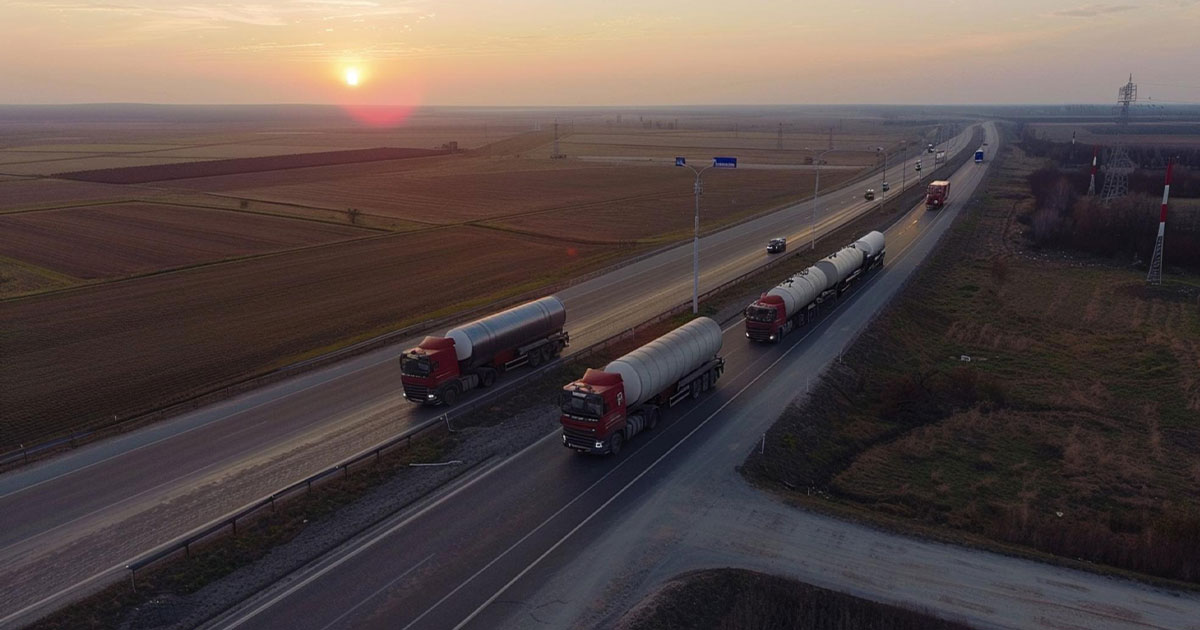
Refined petroleum products need to get from coastal refineries and import terminals to depots and filling stations around the country. South Africa uses a combination of road, rail, and pipeline (notably the Transnet Pipelines system) to move fuel inland.
These inland transport costs are incorporated into the pricing structure based on magisterial district zones — the further a zone is from a coastal port, the higher the transport cost built into the price. This is why diesel (and petrol) is more expensive in Gauteng than at the coast: Gauteng is over 500 km from Durban, and the cost of getting fuel there is reflected in the price. Transport and distribution costs amount to approximately R0.95 per litre in the current structure.
4. Wholesale Margins
Oil companies and fuel wholesalers charge a margin for supplying fuel to service stations. These margins are regulated by the DMPR and are set as a fixed maximum monetary margin per litre. The formula used to determine the wholesale margin is based on the Marketing of Petroleum Activities Return (MPAR) guidelines. In recent years, wholesale margins have been approximately R0.81 per litre for diesel.
5. Retail Margins
For petrol, the retail margin (the amount a service station earns per litre) is strictly regulated. For diesel, as noted above, retailers are free to set their own margins above the regulated wholesale price, which is why retail prices vary between stations. The regulated retail margin for petrol is currently around 15% of the inland pump price, serving as a reference point for the diesel market.
What Influences the Diesel Price?
International Crude Oil Prices
The single largest driver of fuel price movements in South Africa is the global price of crude oil. Because the BFP is calculated on an import parity basis referenced to international product prices, any movement in crude oil flows directly into the South African fuel price with approximately a one-month lag. Brent crude, the international benchmark most relevant to South Africa, is traded in US dollars and influenced by geopolitical events, OPEC+ production decisions, global demand trends, and supply disruptions.
The events of early 2026 illustrate this dramatically: escalating conflict in the Middle East drove Brent crude from approximately US$69 per barrel in the February review period to US$93.67 in the March review period — a rise that translated into diesel price increases of between R7.37 and R7.51 per litre from 1 April 2026. Further increases of over R13 per litre are projected for May 2026 if tensions around the Strait of Hormuz persist, with Brent crude having climbed above US$100 per barrel.
The Rand/Dollar Exchange Rate
Because crude oil and refined petroleum products are priced in US dollars, the value of the South African rand against the dollar is a critical factor in what South Africans pay at the pump. When the rand weakens, more rands are required to purchase the same amount of fuel in dollar terms, pushing prices up. When the rand strengthens, it has the opposite effect.
The rand is itself influenced by a wide range of factors including South Africa’s trade balance, interest rate differentials, political risk perceptions, global risk sentiment, and commodity prices. Rand weakness has compounded the impact of rising crude prices in the 2026 fuel price crisis.
The Monthly Pricing Mechanism
South Africa adjusts controlled fuel prices (and publishes diesel reference prices) on the first Wednesday of each month. The adjustment reflects the average movements in the BFP and exchange rate over the preceding review period. This means South African prices lag international price movements by approximately one month — which can be both a buffer and an amplifier, depending on direction.
Geopolitical Events
Beyond their direct impact on oil prices, geopolitical events can affect freight rates, shipping insurance costs, and supply chain logistics — all of which feed into the BFP. The Strait of Hormuz, through which around 20% of the world’s oil supply passes, is a particularly sensitive chokepoint whose disruption immediately affects global fuel markets.
Local Policy Decisions
The South African government retains significant levers to influence the final price of diesel, primarily through the General Fuel Levy and the RAF Levy. The GFL in particular, being a flat per-litre charge, represents a tool for temporary consumer relief — as demonstrated by the R3 per litre temporary cut announced in April 2026. Permanent or structural changes to the GFL, the RAF levy, or the pricing model itself can have a significant impact on long-term diesel prices.
The DMPR has indicated that it is currently conducting a comprehensive review of South Africa’s fuel pricing mechanism, with findings expected by early 2027.
Diesel Adulteration
A less obvious but real market factor is the adulteration of diesel with illuminating paraffin — a practice that has grown substantially since 2019. Adulterated diesel is sold at lower prices than legitimate diesel but damages engines and infrastructure. The IP Tracer Dye Levy was introduced specifically to fund measures to combat this, and the Fuels Industry Association has consistently raised the alarm about its economic impact on the industry.
The Broader Economic Impact
Diesel holds a unique position in the South African economy because of its near-ubiquitous role in productive activity. Unlike petrol, which is predominantly used by private motorists, diesel powers the freight transport system, agriculture, construction, manufacturing, and mining. When diesel prices rise sharply, the effects cascade through the entire economy: food prices increase as transport and farming costs rise, manufactured goods become more expensive, and services dependent on logistics face margin pressure.
For low-income households — which spend a disproportionate share of their income on food and transport — diesel price increases are effectively a regressive tax on daily life, even for those who do not own diesel vehicles. The South African Reserve Bank closely monitors fuel prices as a driver of headline inflation, and significant fuel price increases reduce the likelihood of interest rate cuts that could provide broader economic relief.
Summary: The Diesel Price Building Blocks
To put it simply, the diesel price at the pump in South Africa is built up as follows:
- Basic Fuel Price (BFP) — the largest and most volatile component, reflecting global crude oil prices, freight, insurance, and the rand/dollar exchange rate.
- General Fuel Levy — a flat government tax, currently around R3.84 per litre (temporarily reduced by R3 in April 2026).
- Road Accident Fund Levy — currently R2.18 per litre.
- Smaller levies — Customs & Excise, Petroleum Products, IP Tracer Dye, NERSA/Pipeline, and the Slate Levy.
- Transport and distribution costs — approximately R0.95 per litre, varying by zone.
- Wholesale margins — regulated maximum of approximately R0.81 per litre.
- Retail margin — unregulated; set by individual filling stations, contributing to price variation between outlets.
As of April 2026, with the temporary General Fuel Levy reduction in effect, the wholesale reference price for diesel (50ppm) stands at approximately R25.35 per litre at the coast and R26.11 per litre in Gauteng — representing some of the highest diesel prices in South African history.
Sources: Department of Mineral and Petroleum Resources (DMPR); Central Energy Fund (CEF); Fuels Industry Association of South Africa; Statistics South Africa; SAnews.gov.za; IOL Motoring.
| Year | Event |
|---|---|
| 1922 | Tetraethyl lead introduced as a petrol additive globally |
| 1996 | United States phases out leaded petrol |
| 1998 | European Union phases out leaded petrol |
| 2002 | World Summit on Sustainable Development in Johannesburg; PCFV launched |
| 2006 | South Africa bans lead in petrol; diesel sulphur reduced to 500 ppm |
| 2012 | Clean Fuels 2 gazetted; 10 ppm sulphur target set for 2017 |
| 2021 | Algeria’s last leaded petrol supply exhausted; world declared lead-free |
| 2023 | South Africa misses 10 ppm diesel sulphur deadline |
| 2027 | Current target date for full CF2 compliance in South Africa |